


The Recap
This first series of columns has found me musing over a favorite question from different angles: how do films show the private labor of becoming someone? I think of this as intimate industry—the sort of striving in which whether your goal is learning to surf or starting your own business, the project to attain it is inside you. Subjecting and correcting ourselves, restraining, calibrating. It’s core social-being activity, basic maintenance we all engage in, some more consciously than others, some more relentlessly. Either way, getting what you want in the world is happening under your skin, and it surfaces for air in everything we do. How do directors make their stories talk about this in movies?
I’ve watched someone’s presence appear almost by accident in Her and The Sixth Sense, noticed how sleight of hand does its hiding in plain view, and been astonished ADR can re-characterize a performance so thoroughly it changes the relationship at the center of the film. I’ve followed life-defining absences through Blade Runner 2049 and Past Lives, and the urges of agency and self-preservation in Clouds of Sils Maria and Lady Bird. Each film has a different take on what resolves to the fundamental address of self.
After writing my way through making something of yourself in The Hobbit and Pumping Iron, I’m still thinking about bodies and performance. Having exhausted the legend of a ring and a stack of plate weight, in the films I’m considering today I’m drawn to the theater of ventriloquism.
Being someone is staged, or borrowed, or … thrown
Woody Allen puts history on his lap and makes it speak as though it’s his creature. He uses Leonard Zelig to embody the force of assimilation. Zelig is a satire of conformity: if your personality is as socially manufactured as the latest popular idea you’re a zombie. Like Victor Frankenstein, Woody Allen rummages emotional dross and chaff, pieces of ceremony piled in archives, garages, and camera junk shops, looking for human remains that might sustain a vital charge with which to animate Zelig.
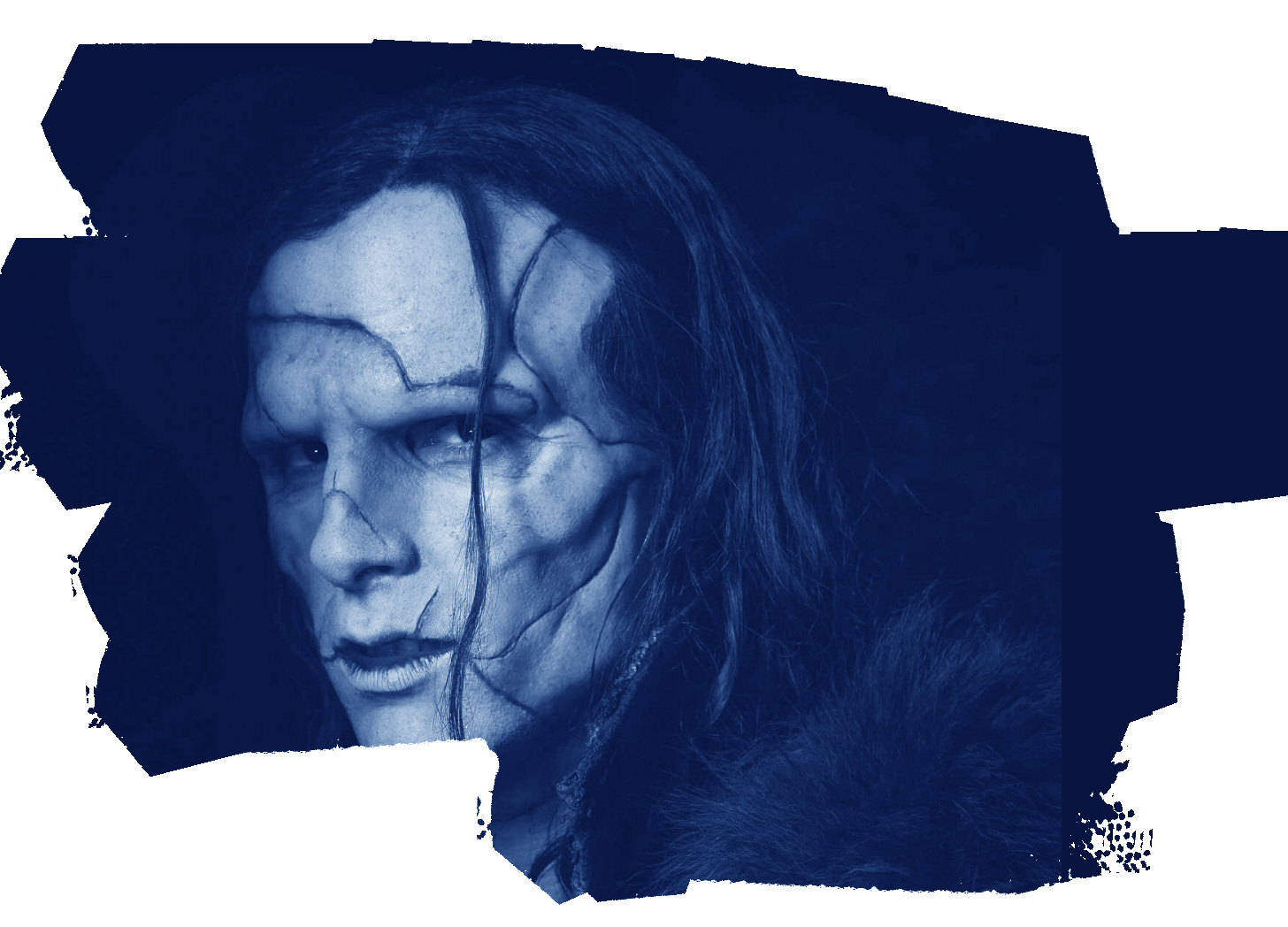
Meanwhile in Frankenstein, Del Toro’s Creature refuses that part entirely. He won’t speak on command, won’t absorb Victor’s voice, won’t perform the obedient mimicry expected of him. His first act of selfhood is a refusal: he insists on the right to speak in the timbre of his own becoming.
Both films are concerned with assemblage—of bodies, of identities, of meanings stitched from other people’s tongues. But only one of their protagonists tries to reclaim a voice that belongs to him alone.
Allen treats identity almost as if it were part of Gordon Willis’s lighting scheme: precision-adjustable, period-calibrated, grain-matched until it becomes indistinguishable from whatever surrounds it. “The Chameleon Man” blends because blending spares him the unbearable void of otherwise being nothing at all.
Among psychologists Zelig speaks like a psychologist; among baseball players, a ballplayer; at political rallies, a partisan. I laughed even as I felt the quick jab of self-recognition. (How often we learn to modulate ourselves for harmony, or safety, or approval!)
And it is funny, until it isn’t. A tranquil Zelig finds anonymity amid the Brownshirts. He bobs up surrounded by them, radiating a naive and discomforting congeniality. He doesn’t know what he wants, and therefore he’s easily convinced to want anything that someone makes seductive. Maybe it’s good for the economy, but it can be dangerous in a crowd. A man without a voice belongs to convenience, a man available to any voice.
That danger is what Allen had in mind when he pointed out the ordinary urge to be liked can nastily decompose into a conformist mentality, even into fascism. The celebrity Zelig is charming only while the stakes are low. Once the world darkens, his mimicry lends him complacently to terrorist accommodation.
A puppet is a ventriloquist’s dream and history’s nightmare.
This is the hinge on which Zelig turns: a man assembled from borrowed voices, and a film assembled from borrowed images, each making the other possible.
The Assemblage of Zelig
If Zelig’s personality is stitched together from whatever surrounds him, the film’s images are, too. Watching Zelig now, it’s easy to forget how little of its seamlessness came pre-packaged. The illusion required the kind of manual labor usually reserved for restoring a damaged artifact—hours spent hunting through newsreels, home movies, and forgotten negatives for material with the right kind of grain, the right degree of decay, even the right amount of vacuum.
Susan E. Morse, the editor, remembered a shot of Rudolph Valentino she loved but couldn’t use because he wasn’t “surrounded by enough empty space.” Zelig needed room for his apparatus. In a literal sense, the construction of his identity depended on the physical margins left in someone else’s photograph. Identity might be flexible in performance, but film stock was stubborn; to blend in, you had to speak its dialect.
Gordon Willis, the cinematographer, found his technical solution partly in the past. He tracked down a set of 1930s newsreel lenses—optically imperfect, uneven, but honest—and had them remounted for the Panaflex. Their flaws became part of the film’s vocabulary: a slight distortion here, a softness at the edges there, each an artifact that allowed new footage to converse naturally with the archival material it was meant to imitate.
The most fascinating thing to me was the way the work literally moved backward from history. Willis and the research team spent weeks studying the original footage. The script lived as a draft that bent to each discovery. Film historian Julian Fox noted, when research turned up something too good to pass by, Allen added the material to the screenplay and rewrote other scenes to make the fit. The assembly grew bit by bit, shot by shot, each new element requiring a rebalancing of what was already there. It reminded me of Robert Towne’s epic struggle with his screenplay for Chinatown.
“If you took something out, it didn’t work, and if you added something, it didn’t work,” Willis said. The structure depended on perfect tension: remove or introduce a single sliver, and the illusion collapsed.
Assemblage, in Zelig, is a disappearing act.
The Assemblage of Frankenstein
If Zelig is assembled to disappear, Frankenstein is assembled so that he can never blend in. Del Toro’s Creature announces every stitch. The body is not a seamless illusion but an exposed construction—a record of choices, mistakes, and revisions made as visible as seams of mark up. Where Zelig blends by adopting the texture of other people’s affects, the Creature stands apart, built from meat and sinew no one meant to remember.
The screenplay makes this plain. Victor picks through the dead with a craftsman’s fussiness: “Look only in the middle of the pile,” he instructs. The corpses on top have been scavenged by carrion birds; the ones on the bottom are too rotted to use. He needs remains with “the right degree of decay,” a grotesque calibration of viability. Scale matters. Limbs matter. He scribbles, sketches, revises; he sutures, saws, and splices. If Zelig relies on the patient coaxing of film grain, the Creature is born from a workshop of bone dust and stitched fascia. Assemblage is no longer invisible finesse—it’s butchering.
And yet Del Toro approaches these permanent scars of violence with a strange tenderness. “He became my patron saint,” he said of Mary Shelley’s Creature. “I saw myself as the Creature—out of place, frail, alien to my reality.” The identification is not romantic; it’s practical—and material. To give the Creature dignity, Del Toro grounds the fantasy in matter. Thirteen head and neck pieces. Twenty-nine full-body prosthetics. Ten hours of application each day. To make a being assembled from cast-off parts, the production had to assemble a body with equal devotion.
That devotion extended to the world around him. Del Toro insisted on building the ship—the entire ship—in which the story’s frame narrative unfolds. No miniatures, no digital facsimiles. The wooden hull was mounted on two gimbals, one for the Creature’s push and one for his retreat. Costumes were loomed from scratch, the fibers chosen to echo circulatory systems, insect wings, minerals. Every surface in the film is fabricated, and every fabrication acknowledges the hand that made it.
Assemblage, in Frankenstein, is a confession.
Under the skin
If assemblage explains how these figures are made, voice explains what becomes of them. Zelig discovers that mimicry is a kind of anesthesia: the closer he matches the people around him, the less he has to feel the absence inside. The Creature has the opposite instinct. His first act of selfhood is refusal. He will not be spoken through. He will not echo Victor’s intentions back to him. He steps out of the frame his maker designed and demands a voice capable of meaning.
It is the sharpest contrast between the films. Zelig moves toward conformity; the Creature moves away from it. One tries to vanish into the safety of the crowd; the other risks everything to be singular. The moral stakes sharpen: to surrender one’s voice is a kind of self-erasure; to claim it is a form of life.
And here Zelig offers an unintended parable. One of the film’s “experts” is the psychologist Bruno Bettelheim, then a respected authority. In retrospect his presence is unsettling. Bettelheim’s public identity—his Viennese pedigree, credentials, even aspects of his reputation—was later revealed to be partly fabricated, assembled from borrowed parts of a life that was not his. Reports from former students describe a temper meant to dominate a room. The irony is almost too neat: in a film about a man who becomes whatever others wish to see, one of the commentators turns out to have been his own kind of chameleon.
It throws Zelig’s predicament into sharper relief. Mimicry can be baby talk, it can be comedic, it can even be an awkward dance lesson toward community where you can relax and actually be yourself. Or it can shade into power, and from there, the shadow of “belonging” becomes the means by which a person disappears into the unclean line, the knacker’s yard of acquiescence. The Creature refuses that fate—refuses the ventriloquist’s hand, refuses the voice thrown into him. His voice emerges haltingly, painfully, but it is his. Del Toro sees this as a kind of grace. “He became my patron saint,” he said, not because the Creature is noble, but because he survives the violence of being made and still speaks.
Between the two films, the question becomes unavoidable:
Who gets to author the voice inside a body?
And what is the cost of letting someone else decide?
The work finds its voice
Somewhere in this question, the labor quiets. Walter Murch once said that cutting a feature means having an opinion about two to four thousand separate shots, each a decision that narrows or expands the film’s possibilities. But the choices themselves are not enough. At some point the structure begins to cohere on its own terms, and the editor’s will gives way to something quieter.
Murch turns to biology for an explanation: DNA, raw information stored in fragments, waiting for the right sequence to activate it. A film grows not because the maker insists, but because its internal order begins to assert itself. “When I can no longer ‘see myself ‘in the material,” the renowned editor has said, then he knows his work is done. “The film finds its own voice.”
It’s a line that gathers everything in this diptych. Zelig surrenders his voice so completely that others dominate and speak for him; the Creature claims his voice through the very scars of his making. One vanishes into borrowed grain; the other emerges from stitched flesh. And somewhere between the two is the fact that creation—whether of a character, a body, a performance, or a self—will bear in its current a temperament of its own.
As a writer, I can feel it in a draft, too, that moment of grace when the whole thing I’ve assembled begins to speak for itself.